Sri Ranga Nayaki
Sri Ranga Nayaki Thayar Temple, Srirangam – The Divine Mother of Bhooloka Vaikuntham
Among the countless sacred shrines within the magnificent Sri Ranganathaswamy Temple at Srirangam, none commands greater affection from devotees than the shrine of Sri Ranga Nayaki Thayar, the eternal Divine Consort of Lord Sri Ranganatha. While Lord Ranganatha is revered as the Supreme Lord reclining on Adisesha, it is Sri Ranga Nayaki who embodies His infinite compassion, grace, and motherly protection. To generations of Sri Vaishnavas, she is not merely the Goddess Lakshmi but the compassionate Mother who intercedes on behalf of every devotee before the Lord.
The Sri Ranga Nayaki Temple is unique among all Divya Desams. Unlike many Vishnu temples where the Goddess shares the sanctum with the Lord, at Srirangam she has an independent and magnificent temple complex of her own, reflecting her supreme status within the Sri Vaishnava tradition. The shrine is one of the most sacred manifestations of Mahalakshmi and occupies a central place in the theology, rituals, festivals, and daily worship of Srirangam.
The Supreme Mother of Sri Vaishnavism
In Sri Vaishnava philosophy, salvation is possible through the combined grace of Divine Mother (Purushakara) and Lord Narayana. The Acharyas explain that while Lord Narayana is the Supreme Judge, Sri Mahalakshmi is the embodiment of mercy. She listens to the prayers of devotees, softens the Lord's justice with compassion, and recommends every sincere soul for His divine grace.
This theological principle reaches its highest expression at Srirangam.
Sri Vedanta Desika beautifully explains that no devotee should approach the Lord without first seeking the blessings of Thayar. Likewise, Sri Ramanuja consistently emphasized that surrender (Prapatti) becomes complete only through the compassionate mediation of Sri Mahalakshmi.
For this reason, countless devotees visit Sri Ranga Nayaki before or immediately after receiving darshan of Sri Ranganatha.
Why She is Called "Ranga Nayaki"
The name Ranga Nayaki literally means "Queen of Srirangam".
Ranga refers to Sri Rangam, the sacred abode of Lord Ranganatha.
Nayaki means Queen, Divine Mistress, or Supreme Lady.
She is regarded as the sovereign ruler of the spiritual kingdom of Bhooloka Vaikuntham. While Lord Ranganatha is the king, temple traditions often describe Sri Ranga Nayaki as the compassionate queen who governs with infinite mercy.
Even today many devotees affectionately address her as:
- Sri Ranga Nachiyar
- Periya Piratti
- Thayar
- Amma
- Mahalakshmi of Srirangam
The word "Thayar", meaning "Mother," perfectly reflects her relationship with devotees.
Historical Development of the Shrine
The shrine of Sri Ranga Nayaki evolved over several centuries under the patronage of the Cholas, Pandyas, Hoysalas, Vijayanagara rulers, and Nayak kings. Temple chronicles known as the Koil Olugu describe the growth of the temple, royal endowments, festivals, jewels, and ritual traditions connected with both Lord Ranganatha and Thayar.
Unlike many temples where the Goddess occupies a comparatively smaller shrine, Srirangam's architects created an independent temple for Thayar with its own sanctum, mandapas, processional routes, and festivals. This architectural choice reflects the elevated theological status accorded to Mahalakshmi within Sri Vaishnavism.
Several inscriptions record donations of gold ornaments, silk garments, lamps, lands, and villages dedicated specifically for the worship of Sri Ranga Nayaki.
The Unique Tradition – Thayar Rarely Leaves Her Temple
One of the most fascinating traditions at Srirangam is that Sri Ranga Nayaki almost never leaves her sanctum.
Unlike Namperumal (the processional form of Lord Ranganatha), who participates in numerous festivals throughout the year, Thayar generally remains within her shrine. This practice symbolizes the dignity and majesty of the Divine Queen.
During important festivals, the Lord Himself comes to visit His Divine Consort rather than the Goddess travelling outside.
This beautiful tradition teaches that while the Lord actively seeks His devotees, the Divine Mother remains the ever-compassionate refuge where every soul may approach without hesitation.
Panguni Uttiram – The Divine Wedding
The grandest festival associated with Sri Ranga Nayaki is Panguni Uttiram, celebrated during the Tamil month of Panguni (March–April).
This festival commemorates the celestial wedding of Lord Ranganatha and Sri Ranga Nayaki. It is among the most emotionally moving celebrations in the temple calendar.
Thousands of devotees gather to witness the sacred union, believing that participation brings harmony in marriage, family happiness, prosperity, and spiritual blessings.
The festival also symbolizes the inseparable union of Sri (Lakshmi) and Narayana, representing compassion and justice, grace and protection, divine love and cosmic order.
The Koil Olugu and temple traditions preserve detailed accounts of these ceremonies and their historical continuity across centuries.
Iconography of Sri Ranga Nayaki
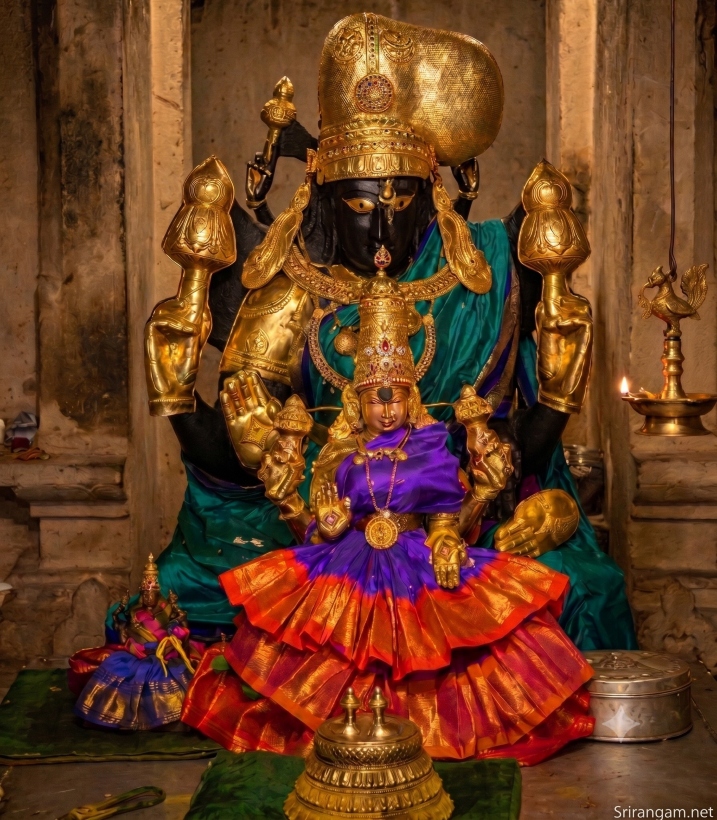
The presiding deity appears seated in majestic posture, radiating serenity and compassion.
She is richly adorned with:
- Golden crown
- Exquisite silk garments
- Magnificent diamond and emerald jewellery
- Lotus in her hand
- Abhaya Mudra (gesture of protection)
- Varada Mudra (gesture of granting boons)
Her gentle smile is often described by devotees as one of the most compassionate expressions found in any temple.
Unlike fierce manifestations of the Divine Mother found elsewhere, Sri Ranga Nayaki represents pure maternal affection, forgiveness, patience, and unconditional love.
The Spiritual Significance of Thayar
Sri Vaishnava philosophy identifies Mahalakshmi with six principal qualities:
- Compassion
- Mercy
- Prosperity
- Divine Wisdom
- Protection
- Mediation before the Lord
Acharyas explain that even when devotees feel unworthy of approaching the Supreme Lord, they may confidently approach Thayar, who never rejects anyone.
This doctrine of Purushakara is one of the defining theological contributions of the Sri Vaishnava tradition and is deeply associated with Srirangam.
Sri Ramanuja and Ranga Nayaki
Sri Ramanuja regarded Srirangam as the spiritual capital of Sri Vaishnavism. During his long residence here, he systematized temple worship, festivals, and administrative practices.
The daily rituals established under his guidance ensured that worship of Sri Ranga Nayaki received equal prominence alongside Lord Ranganatha. His reforms profoundly influenced temple life and are reflected in later temple records.
Darshan Experience
Pilgrims often describe the atmosphere within the Thayar shrine as remarkably peaceful.
Compared to the larger crowds at the sanctum of Lord Ranganatha, the shrine of Sri Ranga Nayaki offers devotees a quieter space for prayer and contemplation. Families frequently pray here for marriage, childbirth, health, education, and domestic harmony, reflecting her enduring role as the compassionate Mother.
Traditional devotees often recommend completing one's pilgrimage with the blessings of Thayar, believing that her grace makes the Lord's blessings complete.
Architectural Features
- The temple dedicated to Sri Ranga Nayaki contains:
- Independent sanctum (Garbhagriha)
- Maha Mandapa
- Beautiful pillared halls
- Ornate Vijayanagara and Nayak sculptures
- Festival mandapas
- Processional pathways
- Intricate stone carvings and traditional iconography
The shrine integrates seamlessly into the vast sacred city of Srirangam while preserving its own identity as the abode of the Divine Mother.
Living Legacy
For nearly a thousand years, Sri Ranga Nayaki has remained the spiritual mother of millions of devotees. Kings sought her blessings before battles, Acharyas composed hymns in her praise, saints surrendered at her feet, and ordinary devotees continue to experience her compassion in their daily lives.
In the hearts of Sri Vaishnavas, no pilgrimage to Srirangam is complete without standing before Sri Ranga Nayaki Thayar, offering a silent prayer, and receiving the reassuring glance of the Divine Mother. Her shrine stands as a timeless reminder that divine grace is inseparable from divine compassion, and that every seeker—regardless of background or circumstance—is welcomed by the Mother before being embraced by the Lord.
Selected References
- V. N. Hari Rao, Kōil Olugu: The Chronicle of the Srirangam Temple with Historical Notes (1961).
- T. S. Parthasarathy, The Koyil Olugu – History of the Srirangam Temple.
- Prof. V. S. Seshadri, A Brief History of the Srirangam Temple.
Temple inscriptions and Sri Vaishnava Guruparampara traditions summarized in the Koil Olugu and historical studies of Srirangam.